
What Are The Different EV Plug Types Used In North America?
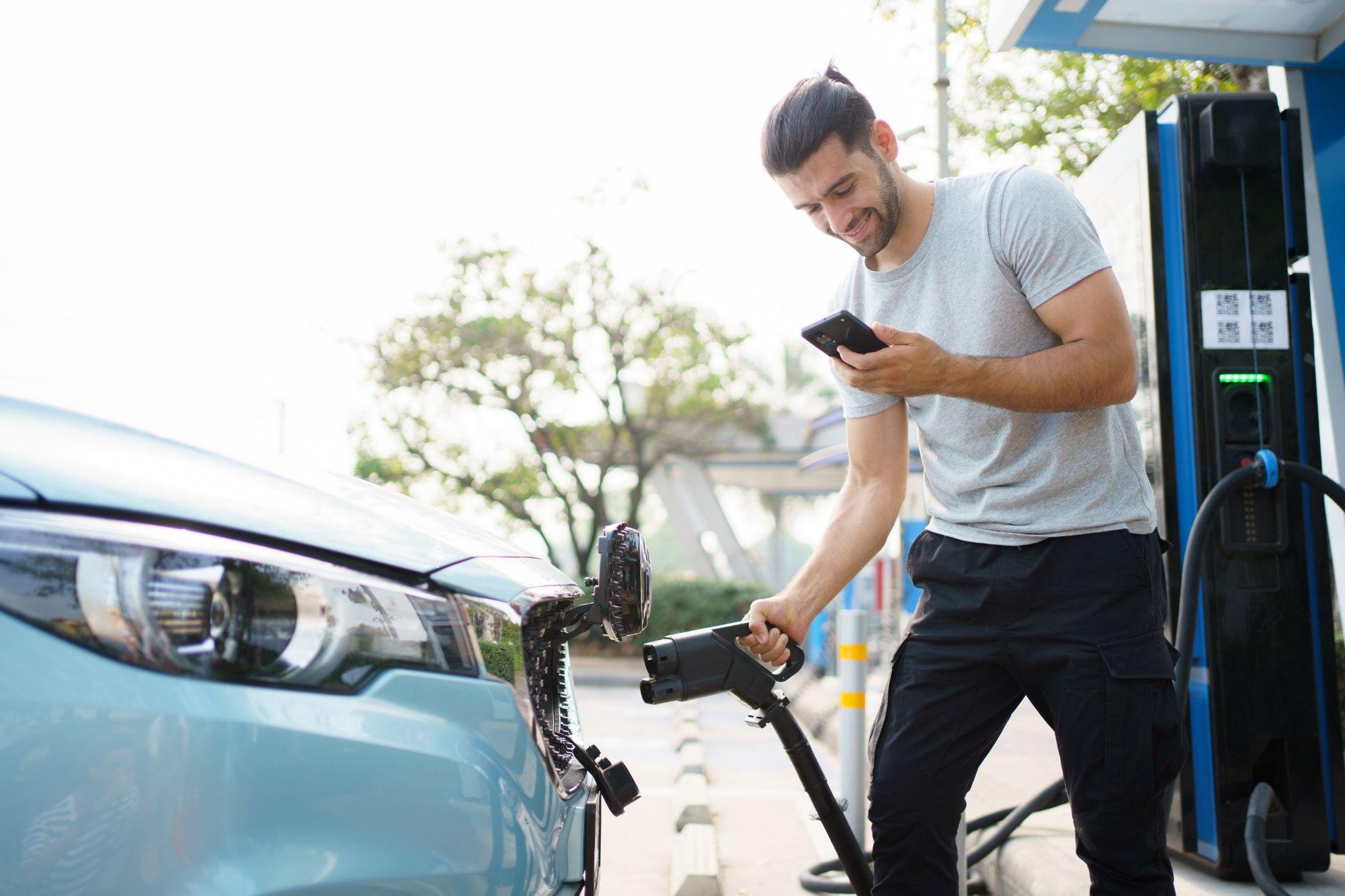
In North America, the most common EV plug for Level 1 and Level 2 AC charging is the J1772 connector, which is widely used by non-Tesla vehicles and provides slower charging at home or public stations. For faster DC charging, the Combined Charging System (CCS) is standard for most automakers, while the older CHAdeMO plug is mainly for certain Japanese models like the Nissan Leaf but is being phased out. Tesla's North American Charging Standard (NACS) is increasingly adopted across brands, offering both AC and DC capabilities in a compact design and integrating with Tesla's Supercharger network.
The Evolution of EV Plug Types
Travel around the world and you’ll soon realize that each continent (sometimes each country) seems to have its own plug to connect devices to the power grid. If you want to use your devices abroad, you’ll typically need an adapter or even a transformer to draw power. The same lack of standardization applies to the EV market, both by fortune and design. EV car manufacturers developed vehicles before an internationally uniform charging infrastructure was in place, while certain manufacturers (eg. Tesla) intentionally developed proprietary solutions that supported their own vehicles only.
Understanding Different EV Plug Types
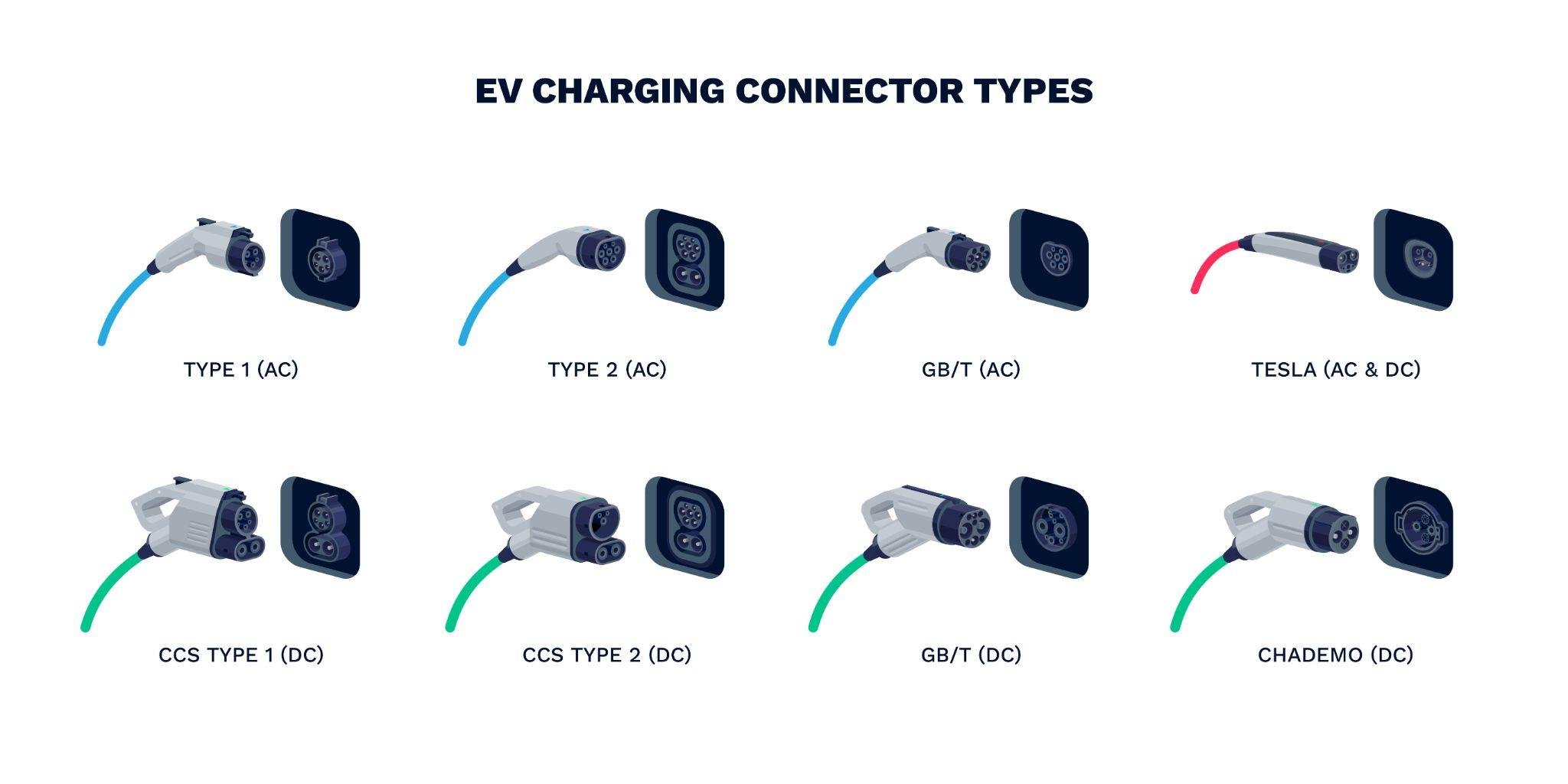
That’s how we reached the current landscape where EV plug types vary according to territory, power source (ie. slow vs. fast charging) and vehicle type.
Type 1 - SAE J1772
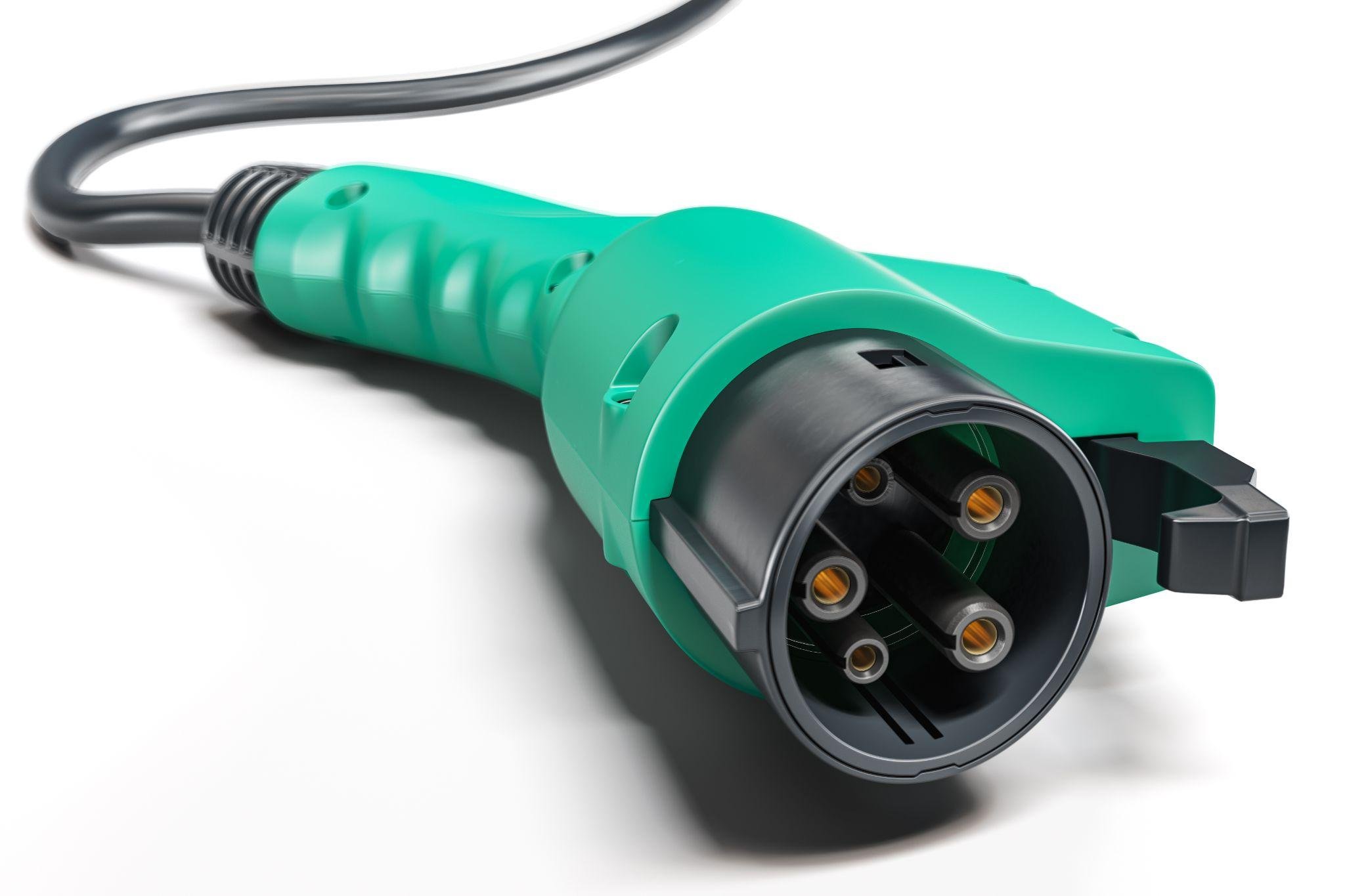
This is the standard for Level 1 and 2 charging in North America and Asia, where the source is a single-phase alternating current (AC). It’s a 5-pin plug that can draw power up to 19.2kW. In most cases, if you’re driving an EV in the USA, you connect to the home or public charging station using a Type 1 plug.
CCS1
You’ll need this 7-pin EV plug if you’re looking for DCFC charging (up to 350kW) in North America, although it can also be used for slow AC charging. Essentially, the CCS1 is a Type 1 plug with two additional high-speed DC charging pins added. If you’re charging at a public station, where the goal is usually to get back on the road with the briefest delay, this is the EV plug for the job.
CHAdeMO
Initially developed in Japan, the 10-pin CHAdeMO was one of the first fast-charging DC plug types on the market. The first generation offered up to 50kW, but the second generation delivers a whopping 400kW. The CHAdeMO also allows for bidirectional vehicle-to-grid (V2G) charging. Despite its popularity in Japan, the plug is slowly being phased out internationally, particularly since the European Commission mandated CCS2 for DC charging in Europe.
NACS (Tesla Supercharger)
NACS stands for North American Charging Standard, which is the official name Tesla gave to its connector design when it opened it up for other automakers and charging networks to use starting in late 2022. It's the same physical plug—compact, lightweight, and capable of handling both AC and DC charging in one connector.
Tesla’s proprietary EV plug accommodates Level 1, 2 and 3 AC and DC charging. In other words, there’s just the one plug.
Open Protocols and Interoperability
In recent years, the push for open protocols has gained momentum within the EV charging industry. Open protocols aim to establish a standardized, interoperable charging infrastructure that allows various plug types to seamlessly connect. That overcomes one of the key frustrations for drivers, and a significant obstacle where EV adoption is concerned. In February 2023, the US finally introduced new national standards for federally funded EV chargers to give drivers uniform consistency.
The Next Generation of EV Plugs - Wireless Charging
The Society of Automotive Engineers (SAE) International is pushing for the development of a wireless power transfer (WPT) charging solution in North America that will be equivalent to the J1772. Three charging speeds are currently in development:
WPT1 (max 3.7 kW)
WPT2 (max 7.7 kW)
WPT3 (max 11 kW)
Although wireless technology is still in the trial phase, it could be a regular feature as early as 2026. However, only one manufacturer in the US (BMW) currently offers a vehicle with wireless charging capability.
Choosing the Right Plug Type for Your Needs
Just as the choice between petrol and diesel is intuitive if you pay attention to the aperture size, so the choice of EV plug is easy to establish. The vehicle will draw the power level from the charger that it needs, so you’re not at risk of overpowering your battery with more current than it can handle.
For North American drivers, it’s a simple choice. All vehicles can use the Type 1 plug for Level 1 and 2 charging, whereas you’ll need the CCS1 or NACS for DC fast Level 3 charging.
The EV Connect Driver App lets you find a compatible connector by filtering in the Map for Charging Level (Level 1, Level 2, and Level 3) and selecting a station to see the available connector types.

To locate the nearest charger, check your charging status, easily make payments, and stay up to date on your account, download the EV Connect Driver App.
About EV Connect
EV Connect is the comprehensive EV charging platform for companies of all sizes to build, run, and scale their EV charging business. Trusted by CPOs, OEMs, fleets, utilities, and more.
With our industry leading API and white label plans, integrate EV charging into your app and create custom charging solutions that fit your brand perfectly.
Contact us today and find out why EV Connect is the #1 EV charging platform to run your business!
Sources
AFDC - Electric Vehicles
Dept. of Transportation - Charger Types and Speeds | US Department of Transportation